
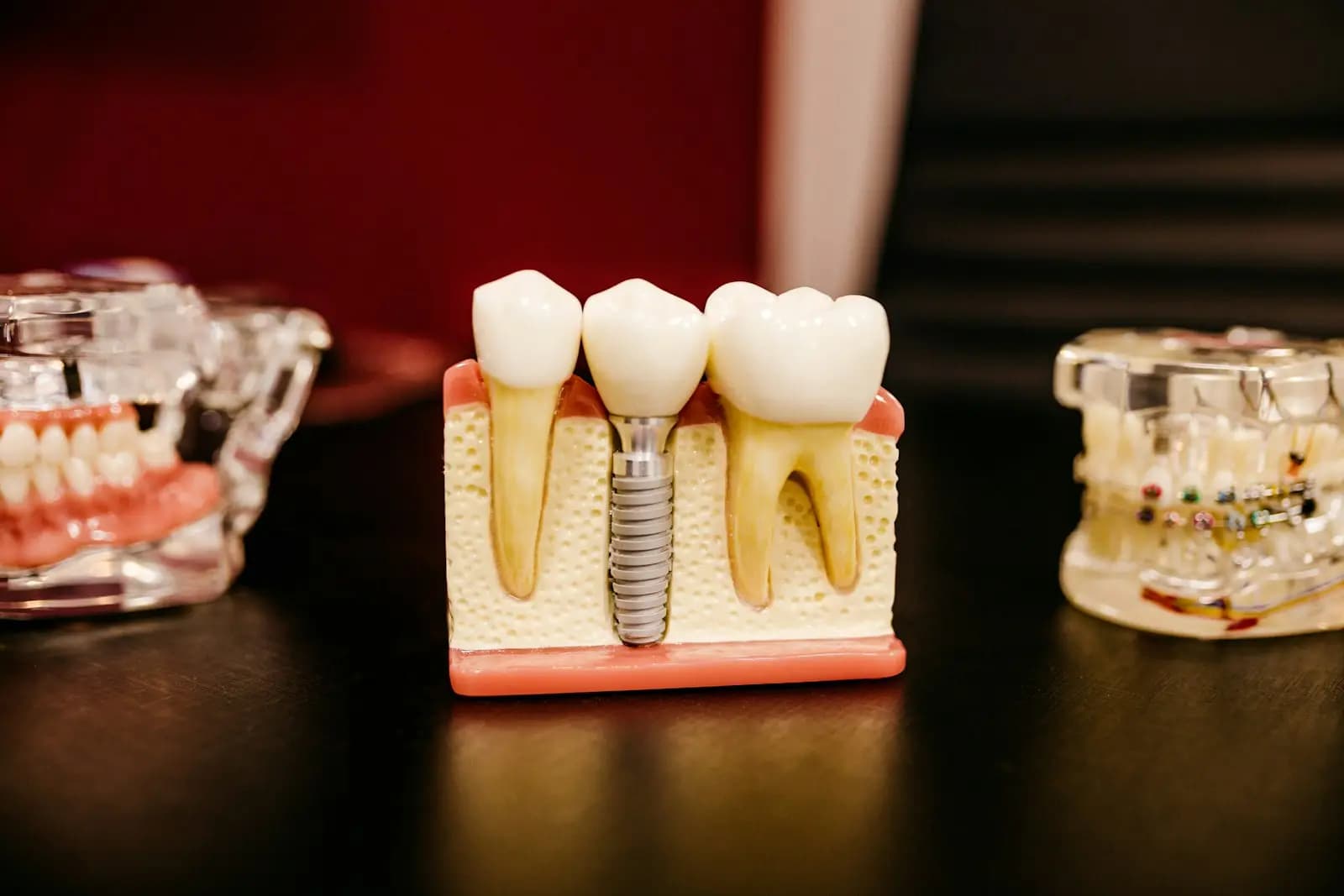
What is it?
An implant is an artificial tooth root placed in the jawbone. Once it has fused with the bone, a crown or bridge is attached on top.
Unlike a bridge, it does not require grinding down healthy neighbouring teeth, and it helps slow down bone loss.
Who is it for?
- Adults missing one or more teeth
- Denture wearers who want fixed teeth
- People with enough jawbone, or bone that can be rebuilt with grafting
- Uncontrolled diabetes, heavy smoking and some medications can affect healing; suitability is confirmed by examination and 3D imaging
Treatment process
- 1Remote review of your photos and X-rays, then examination and 3D scan at the clinic
- 2Implant placement under local anaesthesia (usually 15–30 minutes per implant)
- 3Bone grafting or sinus lift if needed
- 4Healing period at home, with temporary teeth if needed
- 5Impressions and fitting of the permanent zirconia or porcelain crowns
How long do you need to stay in Istanbul?
Most international patients make two trips: 3–5 days for implant placement and 5–7 days, 2–6 months later, for the permanent teeth.
Aftercare
- Avoid hot food, smoking and vigorous rinsing for the first 24 hours
- Mild swelling for a few days is normal; take the medication prescribed
- Clean around your implants daily with a toothbrush, floss or interdental brushes
- Have a check-up at least once a year
Frequently asked questions
Is implant surgery painful?
It is done under local anaesthesia, so you should not feel pain during the procedure. Mild soreness afterwards is usually managed with standard painkillers.
How long do implants last?
Well-integrated implants can last many years, often a lifetime, with good oral hygiene and regular check-ups.
Can I fly after implant surgery?
Most patients can fly a day or two after routine implant placement; your dentist will confirm this, especially after a sinus lift.
This page is for general information; diagnosis and treatment require an examination by a dentist.