
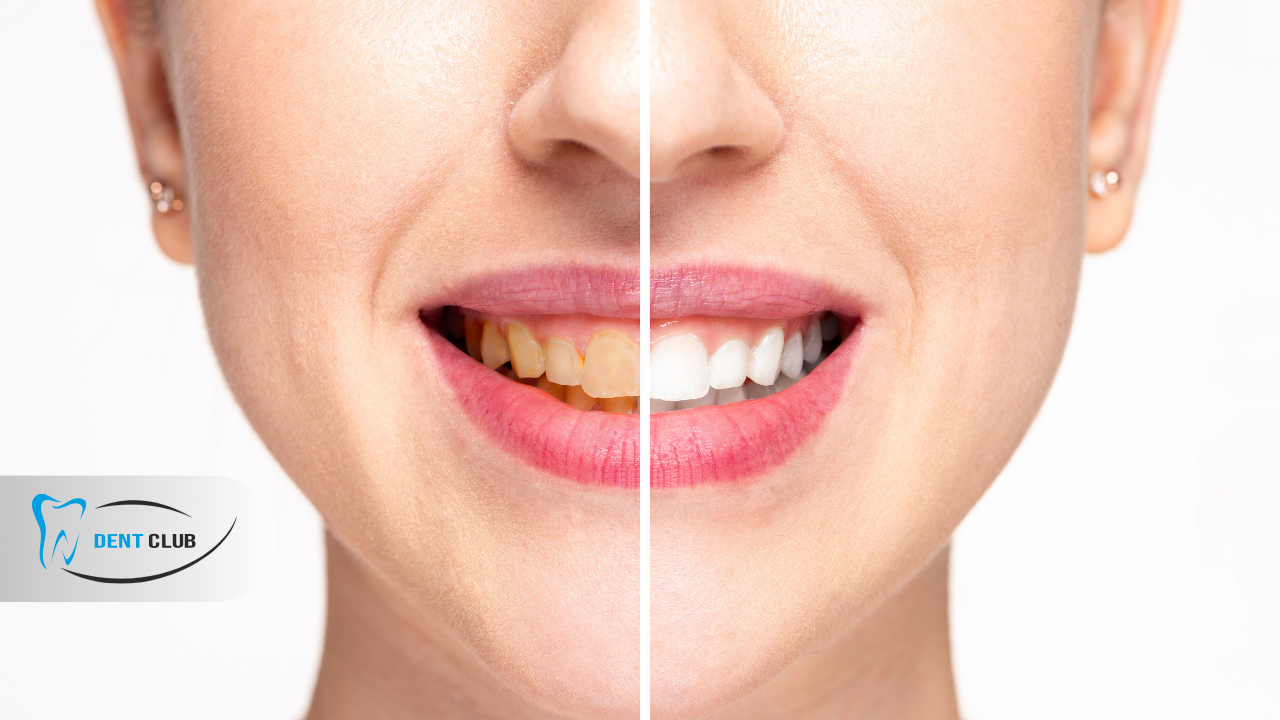
Reclaim Your Smile’s Brilliance: A Comprehensive Guide to Understanding and Treating Teeth Stains at Dent Club, Istanbul
Hello dear readers and everyone dreaming of a beautiful smile!
Smiling… Perhaps one of the most joyful and contagious human expressions. A sincere smile is like opening your windows wide; it melts the ice between you and others, builds trust, makes you more attractive, and most importantly, makes you feel wonderful about yourself. However, sometimes, those white pearls that greet us in the mirror can gradually change color, casting shadows upon our confidence… Yes, we’re talking about teeth stains.
Unfortunately, teeth stains are a common problem that can dim many people’s smiles and undermine their self-confidence. You can wear the most elegant outfit, apply the most beautiful makeup, but those stubborn stains on your teeth can drain all your energy, making you feel shy and hesitant. Yet, having bright white and healthy teeth is not just a dream!
At the Dent Club Family in Istanbul, Turkey, we believe that everyone deserves to have the brightest and healthiest smile possible. In this long and detailed guide, we will cover everything you need to know about teeth stains in a friendly and understandable language – from why they occur, to natural methods you can try at home (with important precautions), the golden rules for prevention, and the modern, effective professional solutions we offer at our clinic in Istanbul. Our goal is to inform you, raise awareness, and help you fall in love with your smile again!
If you’re ready, let’s delve into why our teeth change color, how we can reverse this situation, and pave the way together towards a dazzling white smile, right here at Dent Club in the heart of Istanbul!
Why Do Teeth Get Stained? Understanding the Causes and Types of Tooth Discoloration
Teeth stains might seem like a problem that appears suddenly one morning, but they are often the result of a prolonged process or specific habits. The color of our teeth can be affected by both external factors and certain internal conditions. We can generally divide teeth stains into two main categories: Extrinsic Stains and Intrinsic Stains.
Extrinsic Stains: The Surface Visitors
These stains result from pigmented substances attaching to the surface of the tooth enamel (the outermost and hardest layer of the tooth). They are usually easier to remove with proper oral hygiene and professional cleaning. Let’s take a look at the main culprits:
Coffee, Tea, Cola, and Pigmented Drinks: The Price of Daily Habits Are you one of those who can’t start the day without a morning coffee? Or perhaps you can’t wake up in the afternoon without a cup of tea? Maybe an ice-cold cola is your favorite drink? All these daily pleasures have the potential to stain your teeth. Dark-colored pigments like “tannins” found in these beverages can penetrate the porous structure of tooth enamel, leading to yellowing or dark spots over time. Frequent and slow consumption (sipping) in particular causes teeth to be exposed to these pigments for longer periods.
Smoking and Tobacco Products: The Arch-Enemy of a Bright Smile Perhaps the most well-known and powerful stain-causer on the list: cigarettes and other tobacco products. The nicotine and tar in tobacco penetrate deeply into the enamel, causing stubborn brown-black stains that are very difficult to remove. It is the habit to be avoided most, not only for aesthetic reasons but also for overall oral health. Stains on smokers’ teeth tend to be much more persistent and widespread.
Red Wine and Certain Foods: Delicious but Risky Choices The dark color and acidic nature of red wine can easily adhere to tooth enamel. Additionally, intensely pigmented foods such as dark berries (blackberries, blueberries, pomegranates), soy sauce, balsamic vinegar, and curry can also leave stains on the tooth surface. The brighter and more intense their color, the higher their potential to cause stains.
Inadequate Oral Hygiene: Plaque and Tartar Traps Not brushing teeth regularly and properly, and not flossing, leads to the accumulation of bacterial plaque in the mouth. Plaque is a sticky film where food and drink residues easily adhere. Over time, mineralized plaque turns into tartar (calculus). Both plaque and tartar cover the tooth’s own color, making it appear yellower or browner, and also create a rough surface for stain-causing substances to attach to more easily. Thus, inadequate hygiene not only causes stains but also increases their persistence.
Intrinsic Stains: Discoloration Coming from Within the Tooth
These stains are color changes that occur not on the outer surface of the tooth, but in the deeper layers, specifically the dentin layer. They are generally more difficult to remove or lighten compared to extrinsic stains and often require professional intervention.
The Aging Process: The Mark of Time As we age, the outermost layer of tooth enamel naturally thins. Enamel has a translucent structure and reflects the color of the underlying dentin layer. Dentin, on the other hand, has a naturally yellower color. As the enamel thins, the yellow color of the dentin becomes more apparent, and the teeth generally appear darker. This is a completely natural process.
Trauma and Tooth Development Anomalies: Unexpected Changes Blows to the tooth (trauma) can cause damage to the blood vessels and nerve tissue inside the tooth. As a result of this damage, the tooth may turn pink, purple, or gray. Furthermore, certain problems during tooth development (in childhood) or genetic factors can affect the structure of enamel or dentin, leading to congenital color differences or stains (conditions like amelogenesis imperfecta or dentinogenesis imperfecta).
Certain Medications: Side Effects Some antibiotics used, especially during childhood while teeth are still developing (the best-known being tetracycline), can cause permanent discoloration in the dentin layer of the tooth. These stains typically appear as grayish or brownish bands and are very difficult to remove. In adults, some medications like minocycline can also cause similar effects. Additionally, medications that cause dry mouth can indirectly promote plaque accumulation, creating a زمینه for stain formation.
Excessive Fluoride Exposure (Fluorosis): Too Much of a Good Thing Fluoride is important for strengthening tooth enamel and preventing cavities. However, excessive exposure to fluoride, especially during tooth development (in childhood), can disrupt the structure of tooth enamel, leading to a condition called “fluorosis”. Fluorosis can manifest as white spots, streaks, or in more severe cases, brown stains and enamel surface irregularities.
Dental Fillings and Restorations: Material Effects Particularly older types of amalgam (metal) fillings can oxidize over time, causing the tooth’s color to appear grayish or darker. Composite (white) fillings, on the other hand, can absorb color from food and drinks over time, becoming stained or taking on a different color from the surrounding tooth.
Genetic Factors: Family Legacy Some people’s natural enamel or dentin color may be genetically yellower or darker than others. This is a purely structural characteristic and varies from person to person.
As you can see, teeth stains can have many different causes. Understanding these reasons is the first step towards both preventing stains and finding the right solution for existing ones.
How to Get Rid of Teeth Stains: Home Remedies and Important Warnings
When you search online for “teeth whitening,” “how to remove teeth stains,” etc., you’ll find countless “natural” and “do-it-yourself” methods. While some of these methods might provide a temporary and superficial effect, others can pose serious risks to your dental health. At Dent Club, our goal is to provide you with accurate information. Therefore, while discussing popular natural methods, we will strongly emphasize the risks and limitations you must be aware of. Remember, the safest and most effective solution is always to consult a dental professional!
Baking Soda and Lemon/Water Mixture: Polish or Abrasion?
- Popular Claim: It is said that baking soda’s abrasive property helps scrub away surface stains, while lemon’s acidic nature fights against stains for whitening. Mixing baking soda with a few drops of lemon juice or water and brushing teeth with it is suggested.
- Facts and Risks: Baking soda (sodium bicarbonate) is indeed a mild abrasive and can help mechanically clean superficial stains from the tooth surface. However, lemon juice is extremely acidic. The acid in lemon erodes and weakens tooth enamel. This can lead to tooth sensitivity, cause enamel loss, and make teeth more vulnerable to staining in the long run. Using baking soda alone or mixed with water very rarely and very gently (like once a month or every two weeks) might provide some surface cleaning, but using it with lemon or using it frequently is absolutely not recommended. The risks far outweigh the benefits.
Oil Pulling with Coconut Oil: A Traditional Method
- Popular Claim: It is believed that swishing about a tablespoon of coconut oil in the mouth for 10-15 minutes (oil pulling) draws out bacteria and toxins, thereby reducing teeth stains and improving oral health.
- Facts and Risks: Oil pulling is an ancient method, particularly found in traditional medicine practices like Ayurveda. While some studies suggest that oil pulling may reduce some bacteria in the mouth, scientific evidence supporting its effectiveness in whitening or removing teeth stains is quite limited and insufficient. It can be seen more as a method that supports general oral hygiene, but it is difficult to say it has a direct stain-removing effect. It has no known harm to tooth enamel or structure, but it also lacks mechanical stain removal capability. It does not replace regular brushing and flossing.
Strawberry and Baking Soda Mask: The Fruit’s Promise
- Popular Claim: It is believed that the malic acid contained in strawberries is a natural whitener, and when combined with baking soda, it becomes effective against stains. Crushed strawberry and a little baking soda are mixed into a paste and applied to the teeth.
- Facts and Risks: Strawberries contain malic acid, yes. Malic acid can slightly dissolve some surface stains. However, this effect is very weak and not strong enough to whiten tooth enamel effectively. On the other hand, strawberries are also acidic fruits. When combined with the abrasiveness of baking soda, this mixture has the potential to damage tooth enamel. Just like the lemon-baking soda mixture, there is a risk of acid erosion and enamel abrasion. Dentists strongly advise against this method.
Apple Cider Vinegar Rinse: An Acid to Be Careful With
- Popular Claim: It is believed that diluted apple cider vinegar cleans teeth stains and reduces bacteria due to its acidic nature. Rinsing the mouth with apple cider vinegar diluted with water is suggested.
- Facts and Risks: Apple cider vinegar is also highly acidic. The acid in vinegar softens and erodes tooth enamel. Frequent or regular use can cause permanent damage to tooth enamel, increase sensitivity, and make teeth more prone to cavities. If you absolutely must try it, it should be very, very well diluted (for example, a teaspoon of vinegar in a glass of water) and the mouth should be rinsed with plenty of water immediately after use. Furthermore, brushing teeth immediately after rinsing with vinegar can damage the enamel softened by the acid, so it’s recommended to wait at least 30 minutes before brushing after rinsing. However, it is generally not recommended by dentists as a stain removal method.
Activated Charcoal Use: Absorption or Scratching?
- Popular Claim: It is believed that activated charcoal absorbs stains and toxins from the tooth surface due to its porous structure, thus whitening them. Brushing teeth with a small amount of activated charcoal powder on a toothbrush is a popular method.
- Facts and Risks: Activated charcoal does have absorbent properties and can attract some substances to its surface. However, scientific evidence regarding its effectiveness in whitening teeth or removing stains is limited. Most importantly, activated charcoal is abrasive. When applied with a toothbrush, it can scratch the surface of tooth enamel. These scratches not only cause the enamel to lose its shine but also allow stain-causing substances to settle more easily in these scratches. In other words, in the long run, you might be making your teeth more prone to staining. Furthermore, not every activated charcoal product on the market is suitable for dental use, and the particle size within it might be large enough to damage the enamel. Therefore, the use of activated charcoal is also generally not recommended by dentists.
Limitations of Natural Methods and Important Warnings: Safety Comes First While the natural methods mentioned above are popular on social media, in most cases, their effectiveness is limited, and most importantly, they carry the risk of causing permanent damage to tooth enamel if used incorrectly or frequently. Losing tooth enamel is an irreversible situation. Acid erosion, enamel abrasion, and increased sensitivity are serious issues you can encounter when trying natural methods.
- Remember: No natural method is as effective and safe as professional teeth whitening or cleaning.
- Always consult your dentist before trying any home method. Your dentist will tell you which methods, if any, are safe based on the condition of your teeth.
- Natural methods can generally only show a very limited effect on superficial, extrinsic stains. They do not lighten the tooth’s natural color or remove intrinsic stains.
- Always use a soft-bristled toothbrush and brush your teeth gently. Regardless of the toothpaste or mixture you use, brushing hard will damage the enamel.
While natural solutions may sound appealing, it’s wisest not to take risks when it comes to your smile’s health.
Golden Rules for Preventing Teeth Stains: Prevention is Better Than Cure
Instead of fighting stains after they appear, preventing their formation from the start is much easier and healthier. Here are effective methods you can use to protect your teeth against stains:
Regular and Proper Oral Hygiene: Clean Teeth, Happy Smiles
- Brush Twice a Day for Two Minutes: Brushing your teeth with a fluoride toothpaste for at least two minutes, twice a day, is fundamental to preventing plaque buildup and the formation of superficial stains. Proper brushing technique is also important; brushing gently from the gum line towards the tooth with circular motions is most effective.
- Using Dental Floss: The interdental spaces that a toothbrush cannot reach are ideal areas for plaque and food residues. Cleaning these areas with dental floss at least once a day not only prevents stain formation but also helps prevent cavities and gum diseases.
- Mouth Rinsing: Rinsing your mouth with plenty of water after meals or staining drinks makes it harder for pigments to adhere to the tooth surface. Fluoride or antiseptic mouthrinses can provide additional support for your oral hygiene upon your dentist’s recommendation. However, mouthrinses do not replace brushing and flossing.
Dietary Habits and What to Watch Out For: Be Mindful of What You Eat and Drink
- Limit Staining Foods: Reduce the consumption of heavily pigmented foods and drinks like coffee, tea, red wine, dark fruit juices (pomegranate, blueberry, cherry, etc.), soy sauce, balsamic vinegar, and curry.
- Use a Straw: When consuming staining beverages, using a straw can reduce the direct contact of the liquid with your teeth, lowering the risk of staining.
- Drink Water or Rinse Immediately: Immediately after consuming a staining food or drink, rinsing your mouth with plenty of water or drinking a glass of water helps clean pigments from the tooth surface.
- Consume “Cleaning” Foods: Eating hard and fibrous foods like apples, carrots, and celery, which increase saliva flow when chewed and help mechanically clean the tooth surface, can be beneficial.
Avoiding Smoking and Tobacco Products: For Your Health and Your Smile As mentioned earlier, smoking is one of the biggest causes of teeth stains. Quitting smoking is the most important investment you can make for both your general health and the color of your teeth.
Regular Professional Dental Cleaning and Check-ups: Your Dentist is Your Closest Friend Stubborn surface stains and tartar that cannot be removed with home methods can only be completely eliminated with professional dental cleaning (scaling and polishing). Visiting your dentist at least twice a year for professional cleaning not only prevents stains from accumulating but also helps maintain your overall oral health. Additionally, during regular check-ups, your dentist can detect other problems that might lead to staining at an early stage.
Professional Teeth Whitening: Safe, Effective, and Lasting Results at Dent Club, Istanbul
We’ve seen the limitations and potential risks of natural methods applied at home. So, what are the safest and most effective ways to get rid of teeth stains and lighten the natural color of your teeth? This is where professional dental procedures come in. At Dent Club in Istanbul, Turkey, we offer you safe and effective whitening solutions using modern technology and our expert team.
What is Professional Teeth Whitening? How Does it Work? Professional teeth whitening is a procedure performed under the supervision of your dentist using specially formulated high-concentration whitening gels (typically containing hydrogen peroxide or carbamide peroxide) to lighten the color of teeth by several shades. These gels penetrate the dentin layer beneath the enamel, breaking down the stained molecules present there. These broken down molecules can no longer reflect light in the same way, making the teeth appear whiter.
In-Office Whitening Methods Available at Dent Club, Istanbul: Fast and Effective In-office whitening is performed under the direct supervision of a dentist at our clinic in Istanbul. These methods typically use higher concentration gels and are sometimes activated with a special light or laser technology.
- Laser or Light-Activated Whitening: After the whitening gel is applied, the gel is activated with a special light or laser. This activation accelerates the breakdown of the whitening gel molecules, speeding up the process and helping to achieve color lightening in a shorter time. Visible results are often obtained in even a single session.
- Clinic-Strength Whitening Gels: This method involves applying high-concentration gels to the teeth for a specific period under the dentist’s supervision, without using light or laser. It also provides strong and effective results.
- Advantages: Fast results (usually in a single session), safety under dentist supervision, more effective stain removal due to high-concentration gel (can show some effect on intrinsic stains). Available conveniently at Dent Club in Istanbul.
Professional Take-Home Whitening Kits Provided by Dent Club: Convenient and Controlled In this method, our dentists at Dent Club will take impressions of your mouth to create custom, clear trays for you. Your dentist will provide you with the appropriate low-concentration whitening gel and instructions for use. You will use these trays and gel at home, usually for a few hours a day or while sleeping at night. The duration of treatment depends on the severity of the stain and the desired result, and can last from a few days to several weeks.
- Advantages: Convenient use at home, lower risk of sensitivity (due to lower concentration gel), potentially more affordable cost compared to in-office whitening, the trays can be used again for touch-ups if needed in the future. Provided as a tailored solution by Dent Club in Istanbul.
- Disadvantages: Results take longer to achieve, risk of gum irritation if the gel is not used correctly.
Advantages of Professional Whitening: Why Choose a Clinic Like Dent Club in Istanbul? Choosing professional teeth whitening at Dent Club in Istanbul offers significant advantages over trying methods at home:
- Safety: Whitening performed under the supervision of our dentists ensures the protection of your gums and guarantees that the correct amount of gel is applied properly. Risks such as enamel damage or gum burns from incorrect application are minimized.
- Effectiveness: Professional gels are much more effective than products used at home (which are usually legally required to be low concentration). They are effective against both extrinsic and, to some extent, intrinsic stains.
- Control: Your dentist closely monitors the whitening process, intervenes if sensitivity occurs, and stops the procedure when you have achieved the desired shade of white.
- Diagnosis and Planning: Before starting the whitening process, our dentists at Dent Club in Istanbul will evaluate the condition of your teeth, determine the cause of the stains, and decide if whitening is suitable for you. If whitening is not suitable (e.g., if stains are on fillings or crowns), we will offer you alternative solutions. Get a personalized assessment at Dent Club in Istanbul.
What to Watch Out For After Whitening: Maintain Your Brightness The first 24-48 hours after professional whitening are crucial. Tooth enamel can be more absorbent during this period. Therefore:
- Avoid staining drinks such as coffee, tea, red wine, cola, and dark fruit juices.
- Do not smoke.
- Avoid staining foods like dark berries (pomegranates, blueberries, cherries), soy sauce, balsamic vinegar, etc.
- Prefer white or light-colored foods and drinks (“White Diet”).
- Pay extra attention to your oral hygiene. After this period, you can return to your normal diet, but generally continuing to be mindful of staining habits will help extend the life of the whitening results.
Is Whitening Suitable for Everyone? Who Should Be Cautious? Professional whitening is generally safe for individuals with healthy teeth and gums. However, certain conditions may prevent whitening or require caution:
- Pregnant or breastfeeding women.
- Children under 16 (high risk of sensitivity as tooth pulp is not fully developed).
- People with gum recession, inflammation, or cavities in their teeth (whitening should not be done before these issues are treated).
- Individuals with excessive tooth sensitivity.
- People with large fillings, crowns, or laminate veneers on their front teeth (whitening will not change the color of these materials, and a color mismatch may occur).
- Individuals with very severe intrinsic stains (whitening may not yield sufficient results, alternatives like veneers may be considered).
Therefore, when you decide to get whitening, the first step should always be to consult a dentist. At Dent Club in Istanbul, our expert dentists will evaluate the condition of your teeth and recommend the most suitable and safest whitening method for you.
Frequently Asked Questions (FAQs)
You might have questions about teeth stains and whitening. Here are the most frequently asked questions and the answers from Dent Club experts in Istanbul:
Can teeth stains be completely removed? Yes, most teeth stains can be significantly reduced or lightened with the right methods and professional treatments. However, the type of stain matters. Extrinsic stains can usually be completely removed, while intrinsic stains can be significantly lightened with whitening but may not disappear entirely. Stubborn intrinsic stains like severe fluorosis or tetracycline stains may require different solutions like veneers. Your dentist at Dent Club will give you the most accurate information based on the type of your stains.
Are natural home teeth whitening methods safe? Some popular natural methods (like lemon, baking soda, vinegar, activated charcoal) carry the potential risk of causing permanent damage to tooth enamel due to their acidic or abrasive contents. Enamel abrasion and tooth sensitivity are the most common risks. Their effectiveness is limited and not scientifically supported. Therefore, great caution should be exercised when trying natural methods, they should be used infrequently, and you must consult your dentist before using them. At Dent Club, Istanbul, we recommend professional solutions for your safety instead of natural methods.
Is professional teeth whitening permanent? The whiteness achieved with professional whitening is not permanent. Over time, teeth can change color again depending on factors like your dietary habits, smoking, oral hygiene, and the aging process. The effect of whitening varies from person to person and depending on habits, but generally lasts between 6 months and 2 years. To maintain the whiteness, good oral hygiene, avoiding staining foods, and “maintenance whitening” sessions (re-whitening) at intervals recommended by your dentist (e.g., every 1-2 years) may be necessary.
What is the most effective professional treatment for teeth stains? The most effective treatment depends on the cause and type of the stain. For extrinsic stains, professional dental cleaning (scaling and polishing) is usually sufficient. To lighten the tooth’s own color and remove intrinsic/extrinsic stains, professional teeth whitening methods (in-office laser/light-assisted or take-home tray whitening) are the most effective solutions available at Dent Club in Istanbul. For severe intrinsic discolorations or structural defects, aesthetic restorations like veneers or crowns may be more suitable. Your dentist at Dent Club in Istanbul will determine which method is best for you.
How to prevent teeth stains in children? The most important steps to prevent teeth stains in children are:
- Using toothpaste containing the correct amount of fluoride (age-appropriate).
- Establishing regular and proper brushing habits.
- Limiting sugary and acidic foods/drinks (especially cola, fruit juices, candies).
- Rinsing the mouth with water after meals.
- Regular dental check-ups (every 6 months). Ensure children use only a pea-sized amount of toothpaste and spit it out to prevent fluorosis. Our pediatric dentists at Dent Club can guide you.
Does teeth whitening cause pain or sensitivity? Experiencing temporary tooth sensitivity during or after professional teeth whitening is a common occurrence. This sensitivity usually subsides within a few days. The concentration of the gel used, the individual’s tooth structure, and sensitivity threshold can affect the severity of sensitivity. At Dent Club in Istanbul, we take special measures to minimize sensitivity (e.g., using desensitizing gels, adjusting whitening time) and provide recommendations for post-procedure sensitivity. In rare cases, a slight tingling sensation might be felt, but this is generally not at the level of pain and is not permanent.
How long does a professional whitening session take? In-office laser or light-assisted whitening sessions at Dent Club in Istanbul usually take around 1 to 1.5 hours, including preparation. Sessions involving only gel application or take-home tray treatments vary according to the protocol set by the dentist. For take-home whitening, the time spent wearing the trays is usually a few hours a day or overnight, and the total treatment duration can range from a few days to several weeks.
Do fillings or crowns whiten? No, teeth whitening gels are only effective on natural tooth tissue. They do not change the color of prosthetic materials such as fillings, crowns, bridges, or veneers. If you have these types of restorations on your front teeth and are considering whitening, you should be aware that the color of the restorations may not match your teeth after whitening. In this case, the restorations may need to be replaced after the desired shade of white is achieved. You should discuss this in detail with your dentist at Dent Club.
Achieve a Healthy and Radiant Smile with the Dent Club Difference in Istanbul!
As you can see, although teeth stains can be a frustrating problem, thanks to modern dentistry, it is possible to tackle these stains and achieve the dazzling white smile you dream of. However, the most important guides on this journey are an expert dentist and a trustworthy clinic.
At Dent Club Dental Clinic in Istanbul, we value your smile and are constantly improving ourselves to offer you the most up-to-date, safest, and most effective treatment methods. With our expert team of dentists, state-of-the-art equipment, and warm, friendly environment, we provide permanent and aesthetic solutions to your teeth stain problems right here in Istanbul.
Remember, it is best to avoid misinformation online and always consult a specialist when making decisions about your dental health. At Dent Club in Istanbul, after a detailed examination, we will determine the cause of your stains, assess the suitability of your teeth for whitening, and create a personalized treatment plan tailored specifically for you (professional cleaning, in-office whitening, take-home whitening, veneers, etc.).
Healthy teeth are not just an aesthetic asset but also a reflection of your overall body health. The Dent Club Family in Istanbul is here to help you achieve both a dazzling white and healthy smile.
You don’t have to hide your smile anymore! Take the first step to radiating light with your smile.
Getting an appointment at Dent Club Dental Clinic in Istanbul for a brighter, healthier, and more confident smile has never been easier. Contact us; we will be delighted to welcome you to our clinic and help you achieve the smile of your dreams!
Dent Club Dental Clinic – The Trusted Address for Healthy Smiles in Istanbul!